No recuerdo cómo llegué hasta aquí
Solo show by Alejandro Guijarro
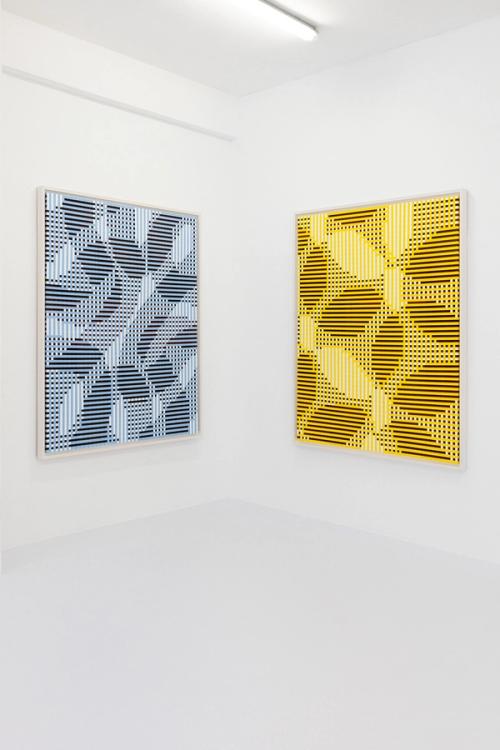
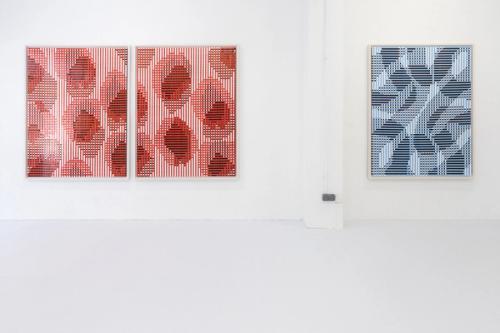
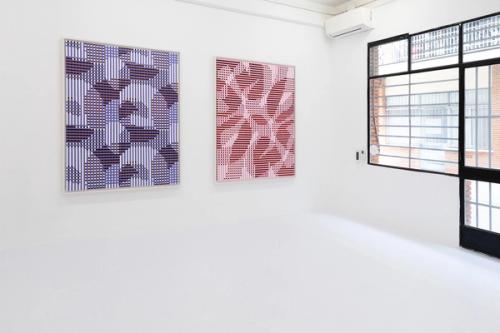
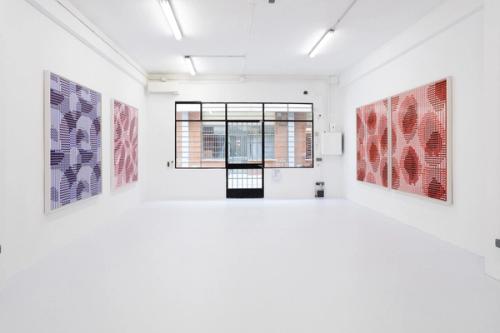
No recuerdo cómo llegué hasta aquí
Solo show by Alejandro Guijarro
23 April - 5 June 2026
Credits
Diego Beyró
Dossier
DownloadWe present “I Don’t Remember How I Got Here”, the second solo exhibition by Alejandro Guijarro (Madrid, 1979). The exhibition brings together a series of previously unseen works that have been developed over recent years, following the singular methodology of research and making that is so characteristic of Guijarro’s practice; once again, the photographic medium functions less as an end result than as a pretext, a tool, and a device for thought.
Alejandro’s practice has consistently revolved around memory and, in this case, also around the very nature of recollection itself. He is interested in the complexity of the brain, although this investigation may also serve as a means of understanding how human relationships function: how do we remember, what do we decide—consciously or unconsciously—to preserve, what is relegated to oblivion, and how does this capacity to discern between what is stored and what is not actually work? It is particularly suggestive that a practice so deeply tied to memory is, at the same time, articulated through a kind of impossibility: even for the artist himself, it is difficult to explain how he arrived here, at results far removed from what might have been expected at the outset of this research.
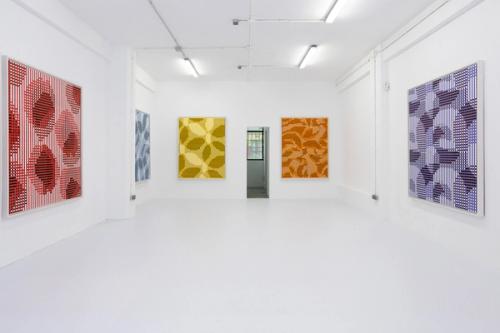
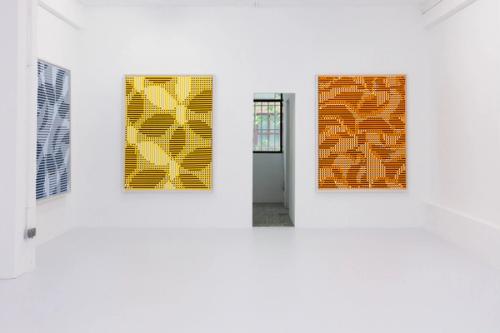
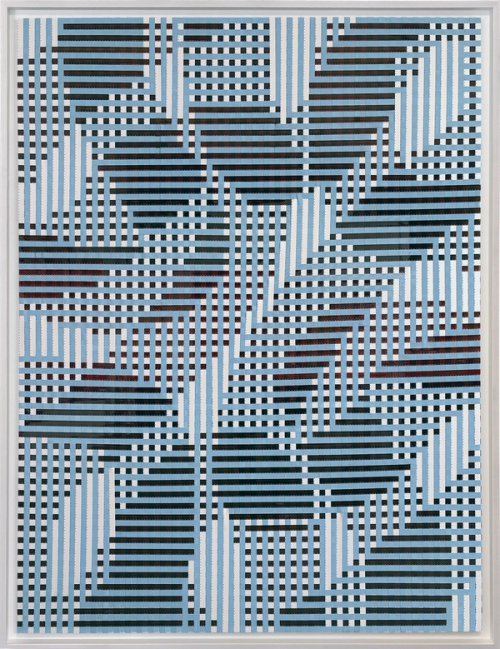
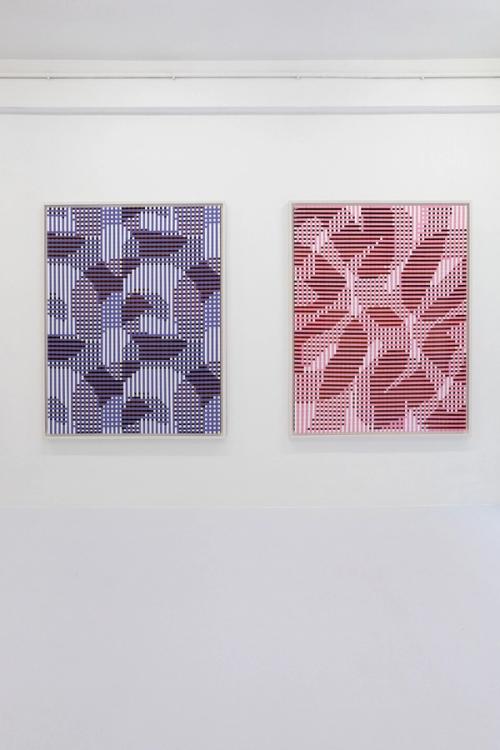
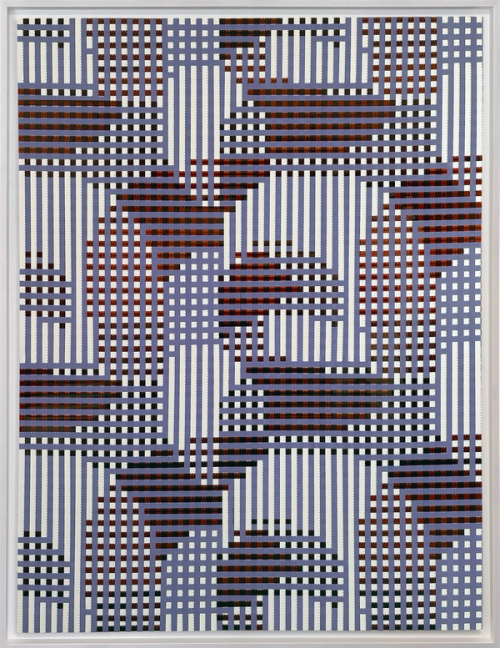
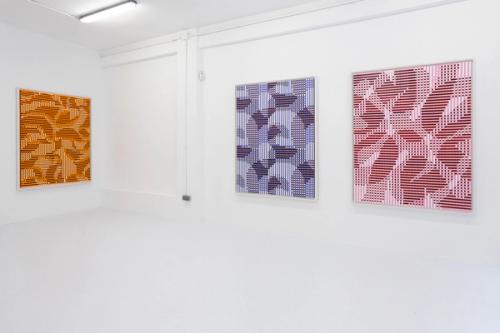
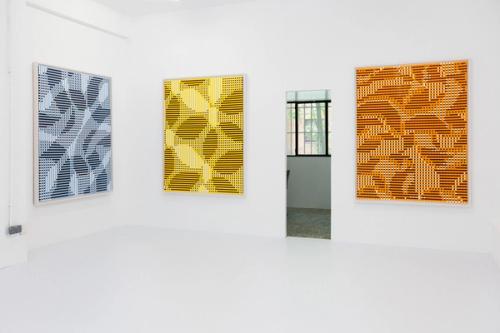
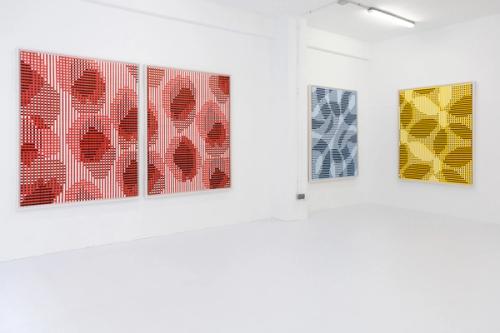
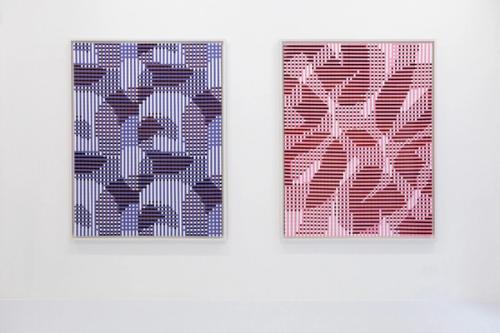
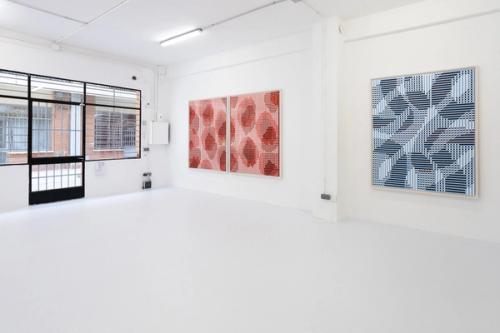
In the traditional cinematic experience, film is a vehicle for linear narrative: a sequence of frames that depends on the persistence of vision to construct a coherent “story.” In these works, that linearity is systematically dismantled. By interweaving found home movies into the rigid architecture of wooden stretchers, the artist transforms the moving image into a distributed, non-static narrative that reflects the brain’s own chaotic yet constructive nature.
In this sense, the works function as a material analogue of the brain’s internal systems of memory retrieval. The human brain does not recover memories as complete and immutable files; rather, it reconstructs them through neural oscillations—rhythmic patterns of electrical activity that synchronize across different regions of the mind. The individual frames of these forgotten films act here as true “synaptic threads,” woven together to generate complex patterns of interference.
Chance occupies a central place in this investigation, as does the artist’s determination to control it. The images we encounter originate in accident, but are subsequently made more complex through an algorithm designed by Alejandro himself, initially conceived as a tool to simplify the process. Yet, just as results always seem to slip from our grasp, simplification never unfolds as intended. At this point, Guijarro appears to assume a role closer to that of a scientist than that of an aesthetic contemplator: it would not be inaccurate to say that his method is closer to the scientific than the artistic. And yet, it is precisely his sensitivity and distinctive sense of form that ultimately offer us these artefacts: objects constructed by and through art, in which method, accident, and memory converge on a single surface.
Just as the brain must navigate through internal “noise” in order to find a clear signal, the viewer must move through a shimmering geometric grid to uncover the images concealed within. The moiré effect generated by the overlapping celluloid is not merely an optical trick; it is an attempt to represent what is known as memory interference, where the superimposition of past experiences distorts, reinforces, or even entirely replaces the original record.
Alejandro’s practice has consistently revolved around memory and, in this case, also around the very nature of recollection itself. He is interested in the complexity of the brain, although this investigation may also serve as a means of understanding how human relationships function: how do we remember, what do we decide—consciously or unconsciously—to preserve, what is relegated to oblivion, and how does this capacity to discern between what is stored and what is not actually work? It is particularly suggestive that a practice so deeply tied to memory is, at the same time, articulated through a kind of impossibility: even for the artist himself, it is difficult to explain how he arrived here, at results far removed from what might have been expected at the outset of this research.
In the traditional cinematic experience, film is a vehicle for linear narrative: a sequence of frames that depends on the persistence of vision to construct a coherent “story.” In these works, that linearity is systematically dismantled. By interweaving found home movies into the rigid architecture of wooden stretchers, the artist transforms the moving image into a distributed, non-static narrative that reflects the brain’s own chaotic yet constructive nature.
In this sense, the works function as a material analogue of the brain’s internal systems of memory retrieval. The human brain does not recover memories as complete and immutable files; rather, it reconstructs them through neural oscillations—rhythmic patterns of electrical activity that synchronize across different regions of the mind. The individual frames of these forgotten films act here as true “synaptic threads,” woven together to generate complex patterns of interference.
Chance occupies a central place in this investigation, as does the artist’s determination to control it. The images we encounter originate in accident, but are subsequently made more complex through an algorithm designed by Alejandro himself, initially conceived as a tool to simplify the process. Yet, just as results always seem to slip from our grasp, simplification never unfolds as intended. At this point, Guijarro appears to assume a role closer to that of a scientist than that of an aesthetic contemplator: it would not be inaccurate to say that his method is closer to the scientific than the artistic. And yet, it is precisely his sensitivity and distinctive sense of form that ultimately offer us these artefacts: objects constructed by and through art, in which method, accident, and memory converge on a single surface.
Just as the brain must navigate through internal “noise” in order to find a clear signal, the viewer must move through a shimmering geometric grid to uncover the images concealed within. The moiré effect generated by the overlapping celluloid is not merely an optical trick; it is an attempt to represent what is known as memory interference, where the superimposition of past experiences distorts, reinforces, or even entirely replaces the original record.