Pacífico
Solo show by Fernando Mastretta
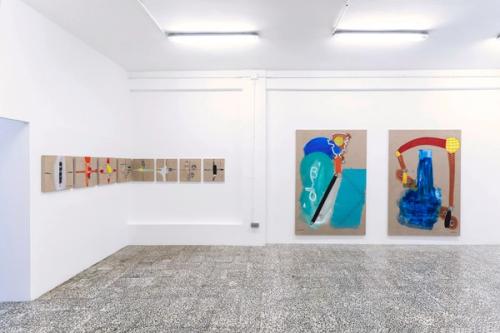
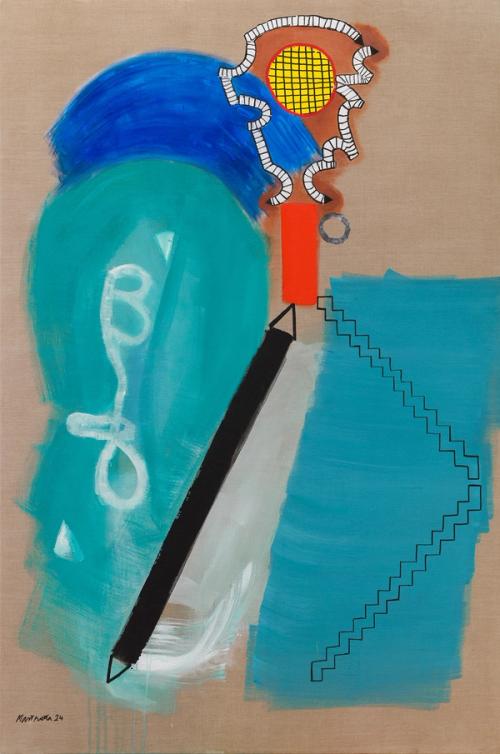
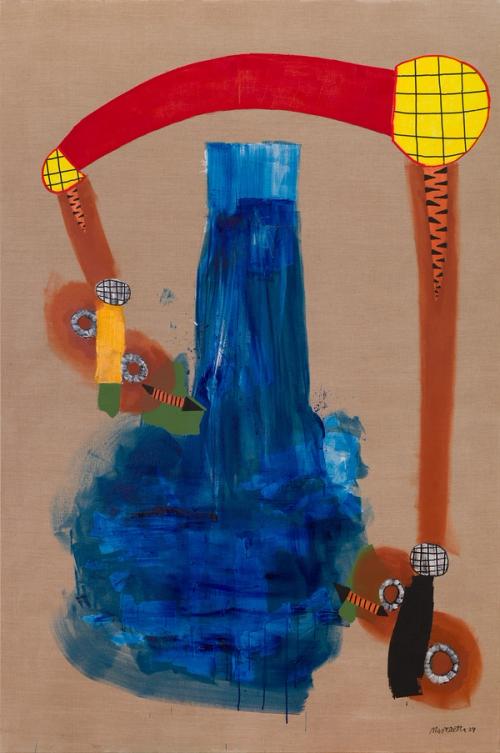
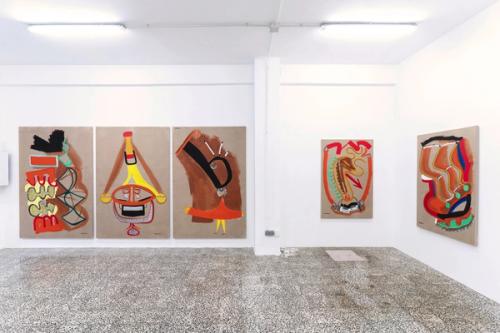
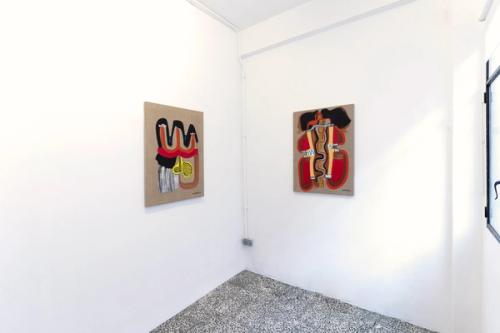
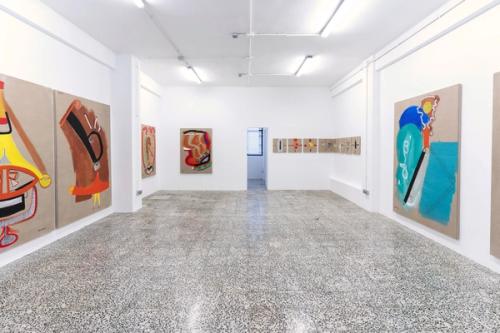
Pacífico
Solo show by Fernando Mastretta
15 January - 21 February 2026
Credits
Pablo Gómez Ogando
Goro Studio
Dossier
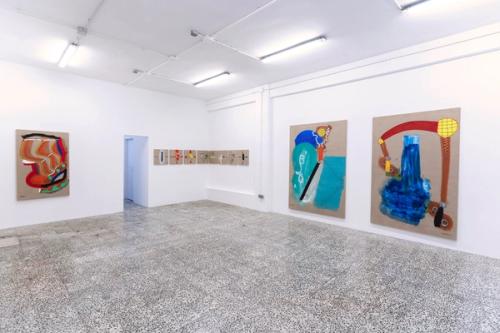
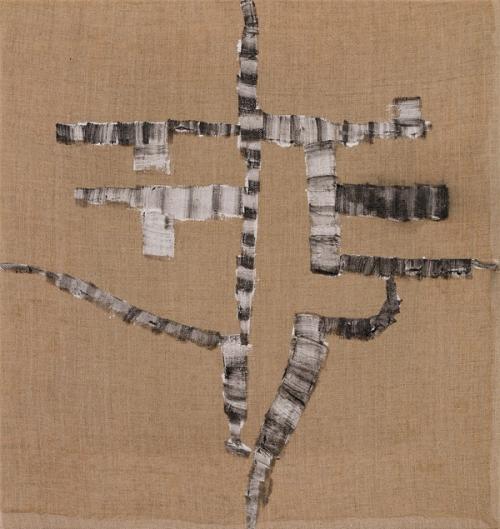
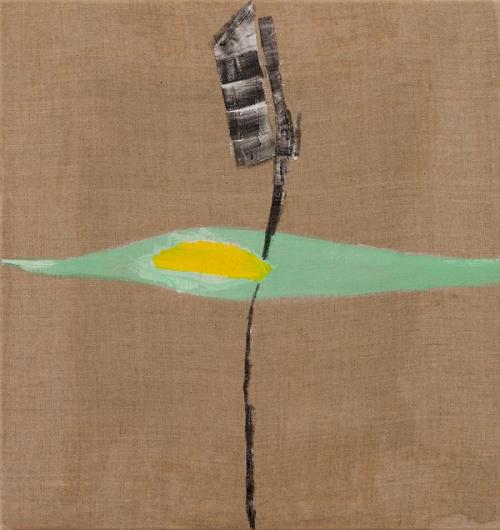
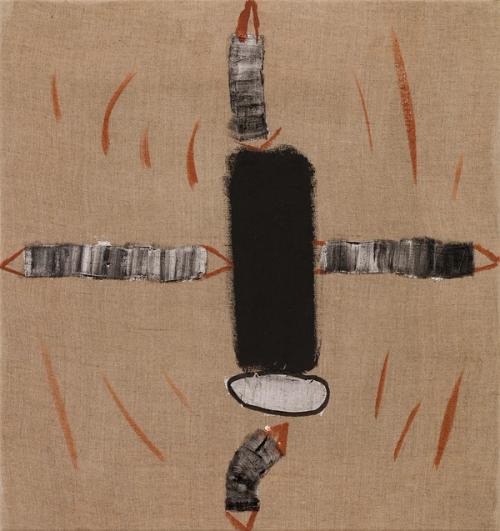
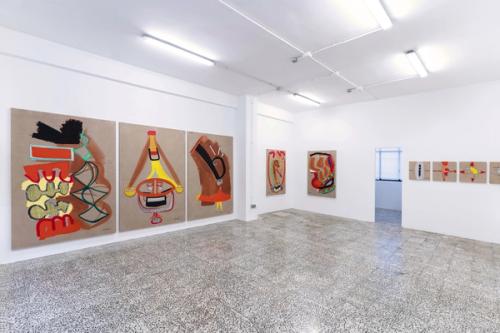
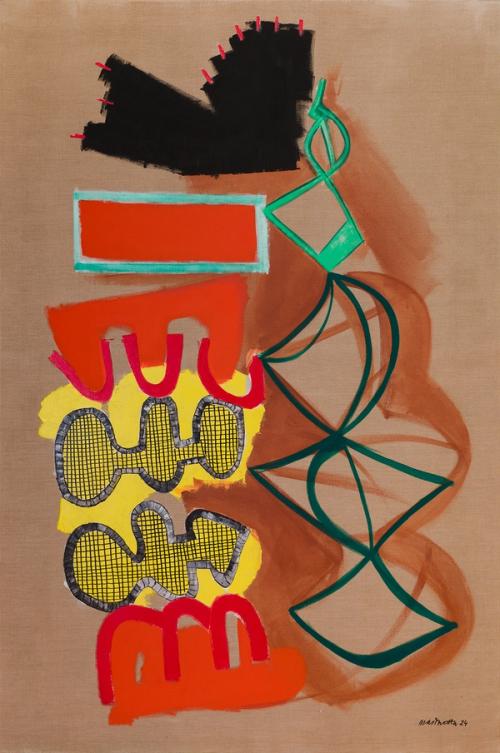
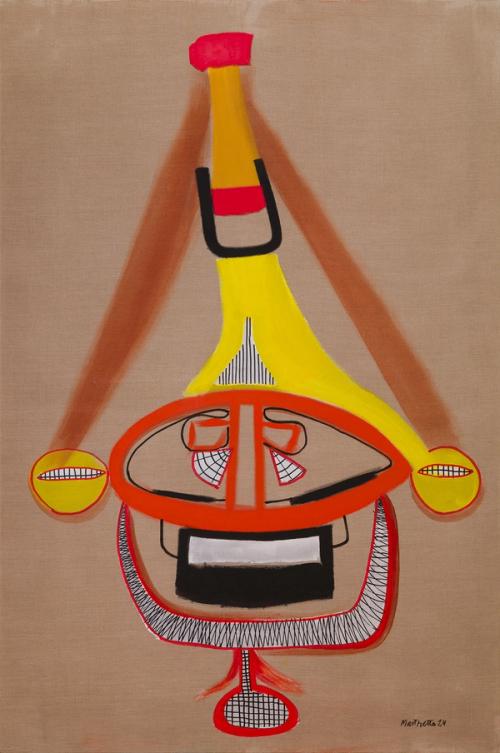
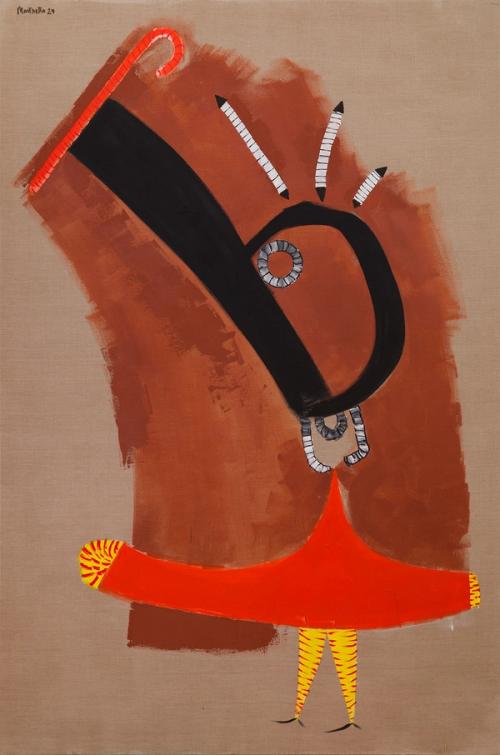
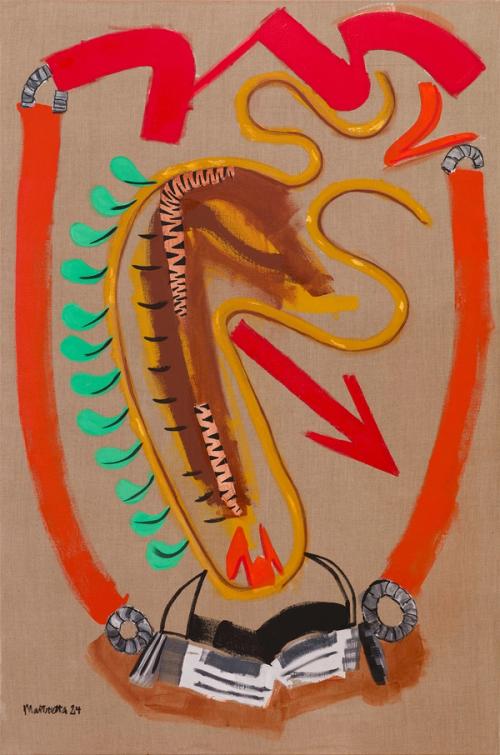
DownloadFernando Mastretta (Barcelona, 1961) has developed a pictorial practice that understands the painting as a site of sedimentation: a space where personal experience, visual memory, and the history of painting intersect without hierarchy. His work is not articulated through direct quotation or explicit reference, but rather through a more hermetic terrain in which influences are transformed into structures, rhythms, and tensions intrinsic to the pictorial language itself.
Mastretta has built a body of work that moves forward through accumulation, trial, and refinement. Over the years, he has gradually shaped a working system based on rule and repetition –a preliminary framework that allows him to operate from within, pushing its limits until they become flexible. Far from closing down meaning, this method opens the painting to multiple trajectories: each work becomes a reflection on how a specific premise can overflow into an open visual experience.
This latest series can be understood not only as a condensation of his practice, but also as both a consequence and, at the same time, a step toward the unknown. Not the unknown as an uncontrollable territory, but as a space of surprise and personal challenge. When reviewing his recent production, this body of work appears perhaps as the most synthetic and, undoubtedly, the most refined to date. This does not imply the closure of a process or the definitive resolution of his questions; if anything, it marks the arrival at a point long sought by the artist, which once again functions as a point of departure.
The metaphors of movement often used to describe painting find here a literal translation. This series emerges from and is shaped by a journey, from the center of Madrid to various locations in Mexico —the city of Mexico City itself, the Pacific coast, roads, hotels, and intermediate pauses— that ultimately became the vital pulse of the trip. These places, traversed and inhabited, act as the lungs of the journey and, in turn, breathe oxygen into this body of paintings on canvas.
For Mastretta, painting is a means of materializing memory, both individual and accumulated. Over time, this exercise has shifted from the narrative and the specific toward the evocative and the abstract, without one excluding the other. One of the central qualities of his work lies precisely in this freedom to move between figuration and abstraction, shaping a language that does not settle at either extreme but holds both in tension. It is possible to see the intensity of this series as directly proportional to the intensity of the journey to Mexico: emotionally and visually, the experience has left a persistent trace that manifests itself on the surface of the canvases.
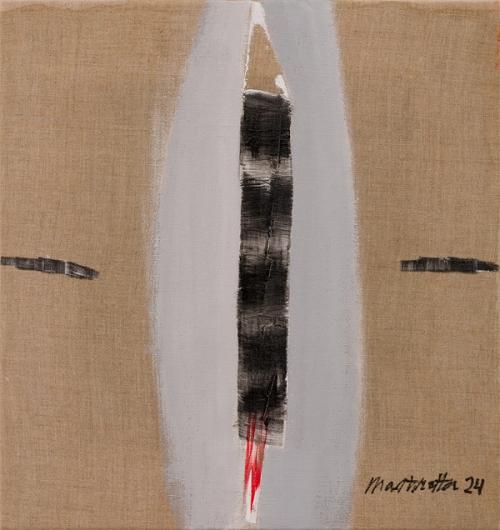
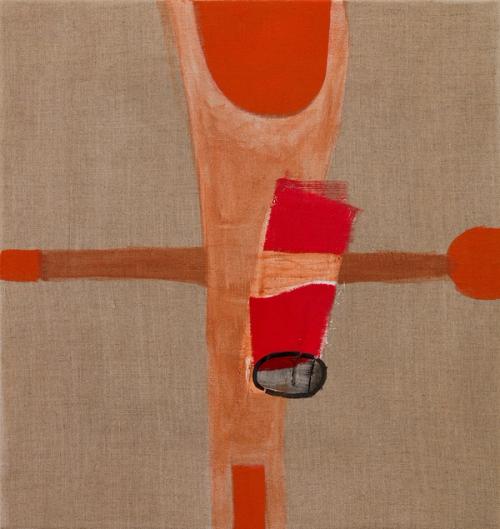
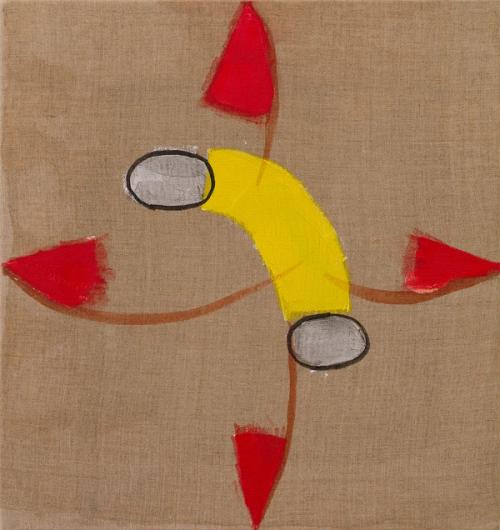
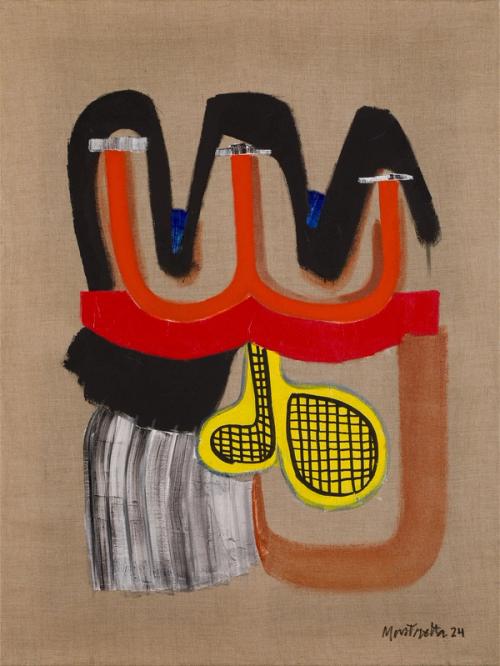
Formally, his work is characterized by a constant friction between control and physicality. Dense and translucent layers, earthy fields of color that slide or evaporate, and structures that both support and destabilize the composition give rise to a painting that is rigorous yet never rigid —considered and at the same time exposed to accident. This coexistence of order and impulse constitutes one of the core concerns of his practice: a search for balance in which emotion does not override the system, but rather passes through it.
From a technical perspective as well, these works function as a journey. From a distance, the image presents an apparent simplicity; up close, it reveals an extraordinary complexity born of years of practice. The combination of materials, the superimposition of planes, supports, grounds, and counterplanes form a dense structure that invites repeated viewing, always open to the discovery of new details. In these paintings, Mastretta not only alludes to specific episodes (the road to Zicatela, vultures, turtles nesting) but also to the painter’s own path, through which persistence allows complexity to appear natural.
Mastretta asserts painting as an act deeply connected to everyday life and to sensory experience. Work in the studio is nourished by diverse stimuli –music, reading, poetry, travel— and is built upon an attitude of continuous learning, where the appropriation and transformation of others’ solutions are a natural part of the creative process. Painting can hold us in the pure pleasure of evocation, but the journey is completed when we discover that beneath the layers of acrylic and pigment lie stories that connect us to the artist’s imaginary world. At that moment, the painting ceases to be merely a space for contemplation and becomes a site of passage: a two-dimensional surface capable of generating new emotions and activating a shared experience of movement.
Mastretta has built a body of work that moves forward through accumulation, trial, and refinement. Over the years, he has gradually shaped a working system based on rule and repetition –a preliminary framework that allows him to operate from within, pushing its limits until they become flexible. Far from closing down meaning, this method opens the painting to multiple trajectories: each work becomes a reflection on how a specific premise can overflow into an open visual experience.
This latest series can be understood not only as a condensation of his practice, but also as both a consequence and, at the same time, a step toward the unknown. Not the unknown as an uncontrollable territory, but as a space of surprise and personal challenge. When reviewing his recent production, this body of work appears perhaps as the most synthetic and, undoubtedly, the most refined to date. This does not imply the closure of a process or the definitive resolution of his questions; if anything, it marks the arrival at a point long sought by the artist, which once again functions as a point of departure.
The metaphors of movement often used to describe painting find here a literal translation. This series emerges from and is shaped by a journey, from the center of Madrid to various locations in Mexico —the city of Mexico City itself, the Pacific coast, roads, hotels, and intermediate pauses— that ultimately became the vital pulse of the trip. These places, traversed and inhabited, act as the lungs of the journey and, in turn, breathe oxygen into this body of paintings on canvas.
For Mastretta, painting is a means of materializing memory, both individual and accumulated. Over time, this exercise has shifted from the narrative and the specific toward the evocative and the abstract, without one excluding the other. One of the central qualities of his work lies precisely in this freedom to move between figuration and abstraction, shaping a language that does not settle at either extreme but holds both in tension. It is possible to see the intensity of this series as directly proportional to the intensity of the journey to Mexico: emotionally and visually, the experience has left a persistent trace that manifests itself on the surface of the canvases.
Formally, his work is characterized by a constant friction between control and physicality. Dense and translucent layers, earthy fields of color that slide or evaporate, and structures that both support and destabilize the composition give rise to a painting that is rigorous yet never rigid —considered and at the same time exposed to accident. This coexistence of order and impulse constitutes one of the core concerns of his practice: a search for balance in which emotion does not override the system, but rather passes through it.
From a technical perspective as well, these works function as a journey. From a distance, the image presents an apparent simplicity; up close, it reveals an extraordinary complexity born of years of practice. The combination of materials, the superimposition of planes, supports, grounds, and counterplanes form a dense structure that invites repeated viewing, always open to the discovery of new details. In these paintings, Mastretta not only alludes to specific episodes (the road to Zicatela, vultures, turtles nesting) but also to the painter’s own path, through which persistence allows complexity to appear natural.
Mastretta asserts painting as an act deeply connected to everyday life and to sensory experience. Work in the studio is nourished by diverse stimuli –music, reading, poetry, travel— and is built upon an attitude of continuous learning, where the appropriation and transformation of others’ solutions are a natural part of the creative process. Painting can hold us in the pure pleasure of evocation, but the journey is completed when we discover that beneath the layers of acrylic and pigment lie stories that connect us to the artist’s imaginary world. At that moment, the painting ceases to be merely a space for contemplation and becomes a site of passage: a two-dimensional surface capable of generating new emotions and activating a shared experience of movement.
Available artworks
Presencia vegetal y vestigios, 2024
Un sendero nuevo hacia la cascada, 2024
Aprendiendo a volar, 2024
Opciones de tránsito a la sabiduría, 2024
Tótem de guía para las tortugas en el desove, 2024
La Herradura, Polanco, 2024
El vigilante del Pacífico, 2024
Maternidad migratoria, 2024
Eyección sin género,2024
Dispositivo de emisión, 2024
Tierra de prisioneros, 2024
Vías de diálogo, 2024