Adentro/Afuera VI
Group exhibition by Lola Vela, Mario Manso, Solange Contreras Pavez, Carlos Cañadas, Daniel Domínguez Romero, Rocío Arjona Arévalo
Adentro/Afuera VI
Group exhibition by Lola Vela, Mario Manso, Solange Contreras Pavez, Carlos Cañadas, Daniel Domínguez Romero, Rocío Arjona Arévalo
10 April - 17 April 2026
Credits
Diego Beyró
Dossier
DownloadThe sixth edition of Adentro/Afuera continues with the intention of opening a meeting space for recently graduated artists, understanding this exhibition as a place of transition between the academic context and the first stages of professionalization. On this occasion, students from the Faculty of Fine Arts at the Complutense University of Madrid participate alongside artists from the University of Granada. This moment is conceived as a displacement, a departure that is also a taking of position, a first gesture in the construction of one’s own practice.
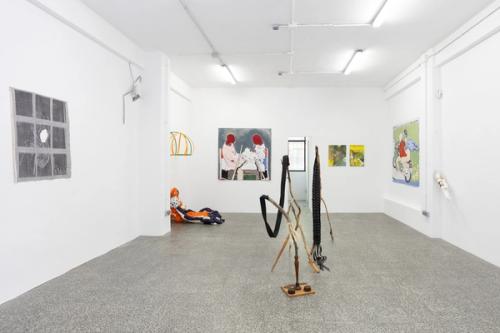
Far from responding to a closed thematic axis, the works brought together seem to trace a network of relationships. A series of diverse approaches to how we relate to what surrounds us: with the body, space, the time we inhabit, history —whether personal or collective— language, or even with what is absent. In this sense, the exhibition functions as a provisional map of positions, where different ways of situating oneself in the world rehearse, through artistic practice, modes of relation that oscillate between the intimate and the structural, the material and the symbolic, the everyday and the imagined.
Adentro/Afuera thus operates as a listening device, a place to attend to how these emerging practices not only produce images, objects, or actions, but also ways of being and positioning oneself. It is in this “in-between” —between inside and outside, between training and practice, between oneself and others— where these works find their place.
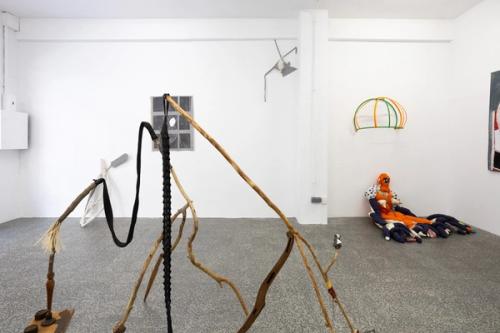
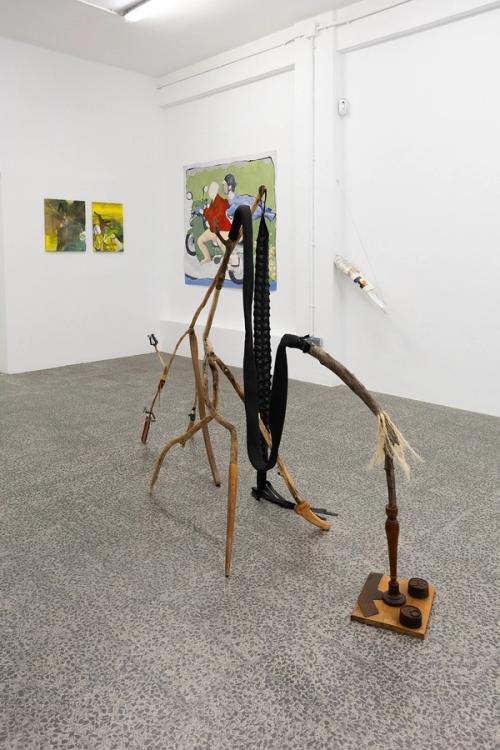
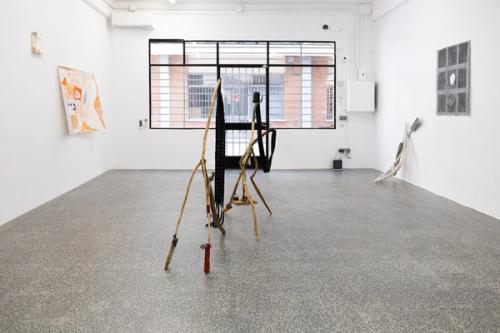
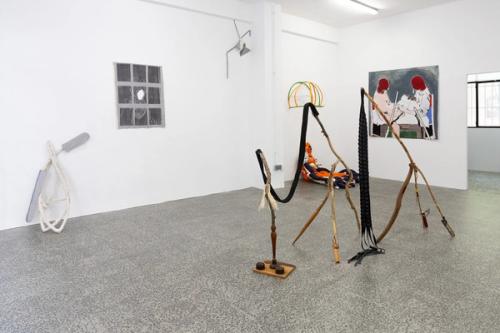
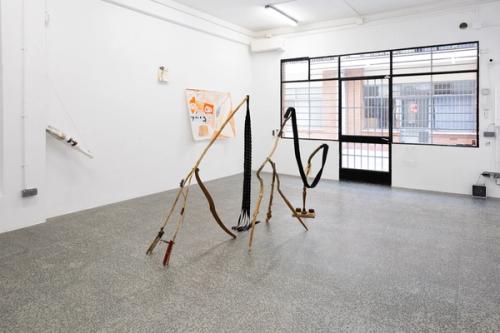
The practice of Solange Contreras Pavez (Santiago de Chile, 1975) is articulated from an ecofeminist perspective, combining her experience as a Latin American woman with a concern for the contemporary ecological crisis. Through ancestral technologies, vernacular knowledge, and low-tech processes, her work proposes other forms of production and relation, closer to care, interdependence, and sustainability. In "Conectores, sistemas para hacer alianzas" (2024–2026), the artist constructs a modular installation from wood —sticks, branches— and intervened found objects such as rubber. These seemingly precarious structures find stability in their connection with others, insisting on the idea of community and mutual support, adapting to the space they inhabit.
Mario Manso (Logroño, 2004) works from encounters with matter and space, where the solid and the liquid, the natural and the industrial intertwine in delicate and temporary balances. Salt plays a central role in his practice—a material that circulates between elements and the environment, entering and exiting, being consumed and expelled, naturally generating structures and channels. His pieces reorganize themselves according to the surrounding space and the contact with those who move through them, presenting form as something alive and flexible. Manso’s practice invites us to perceive matter as an organism in motion, a bridge between body, space, and time, and a way of exploring the relationship between the organic and the spatial.
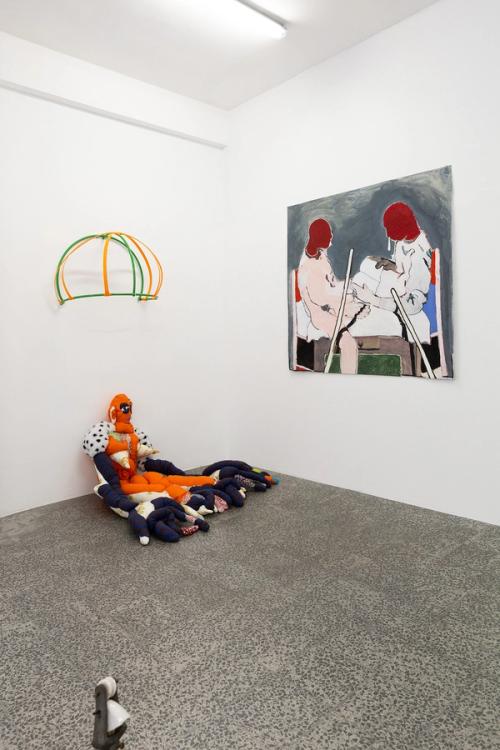
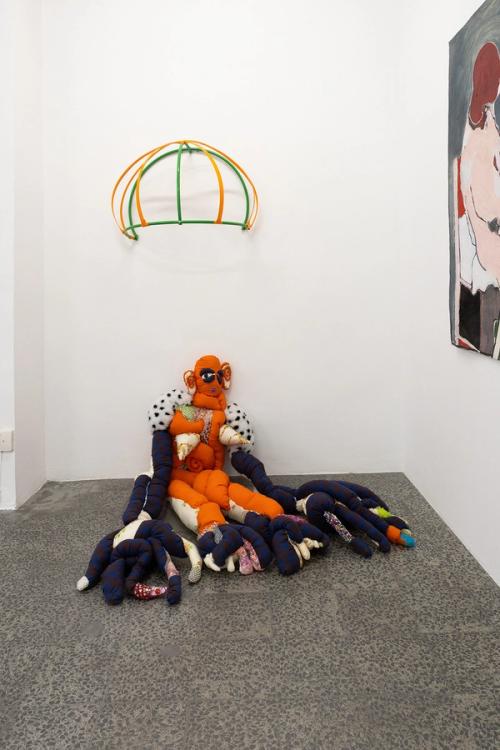
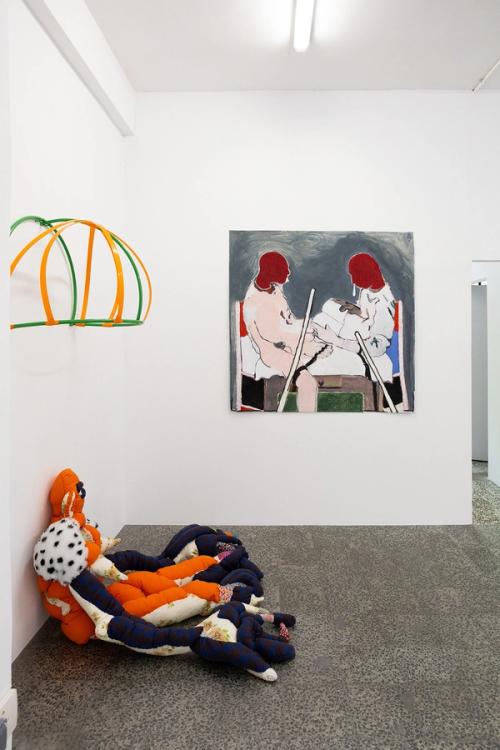
Lola Vela (Madrid, 2002) transforms intimacy into an expanded body. Starting from her bedroom and from writing as a driving force of research, she creates a large-scale doll that embodies experiences, memories, and emotions, symbolizing the possibility of opening up to one’s own paths and disobeying imposed norms. Assembled from inherited fabrics and hand-sewn materials, the piece unfolds beneath a canopy that acts as a liminal space, an “in-between” connecting the intimate with the public, protecting the body while keeping it in relation to the outside. Through sewing, writing, and color, Lola constructs a world where subjectivity, personal pleasure, and queer and feminist imagination allow for the exploration of freer, less violent forms of existence.
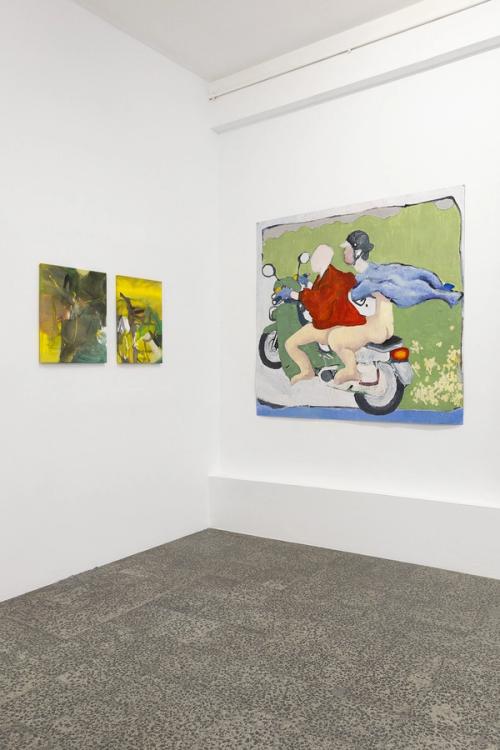
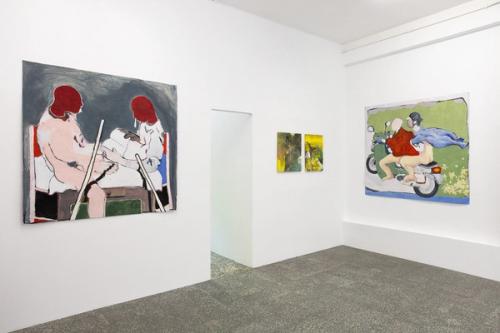
The paintings of Carlos Cañadas (Granada, 1998) belong to his series "Las piedras y las flores", a body of work centered on the relationship between two presences that accompany, confront, or reflect one another. Inspired by the figure of the psychopomp, the characters —siblings, friends, or enemies— embody dynamics of power, contradiction, and mutual care. Through this series, Cañadas turns painting into a terrain for exploring the ambiguity of bonds and the ways in which we relate to others, showing how proximity and tension between opposites can open up new ways of seeing and feeling.
The works of Rocío Arjona (Málaga, 2002) function as a record of movement and the tension between presence and absence. Each painting emerges from the gaps left by the previous one, as if forming a chain in which color, form, and gesture are linked to sustain something that is always about to happen. Wind, horizon, and landscape act as invisible forces that move both the bodies within the painting and those of the artist. Her works oscillate between the visible and the ghostly, articulating a space where absence carries weight and what seems to slip away can, at the same time, be held.
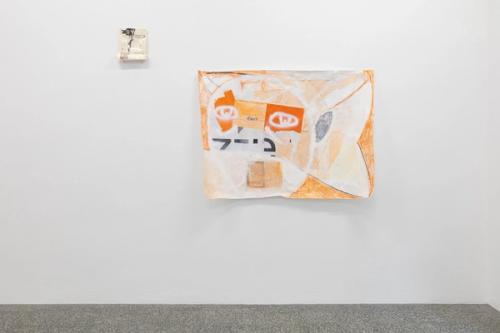
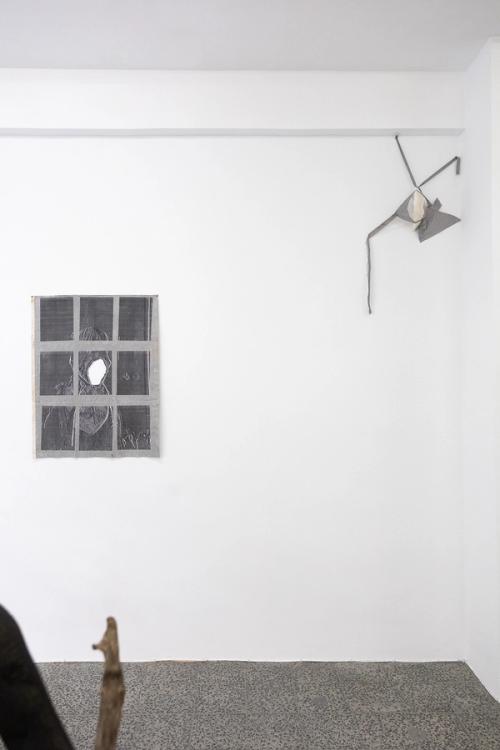
The work of Daniel Domínguez (Cádiz, 2000) arises from the materialization of language, understanding words, sounds, and gestures as bodies that can be drawn, sculpted, and written. His pieces from the series "Diálogos" intertwine the oral and the visual to reveal the residues of speech, the stumbles and silences that traverse us. They emerge from conflict with materials and the time of the studio: wrinkles, cuts, and folds become scars that speak of healing and autonomy. Each work confronts its environment and adapts to it, gaining corporeality before being recognized as part of his practice. Here, language becomes body and space, functioning as an intermediary between what we say, what we feel, and what ultimately endures, opening up new ways of relating to words, objects, and the world. Domínguez’s practice invites us to perceive how what we usually understand as communication can transform into form, rhythm, and presence, exploring new ways of relating to language, to objects, and to the world around us.
Far from responding to a closed thematic axis, the works brought together seem to trace a network of relationships. A series of diverse approaches to how we relate to what surrounds us: with the body, space, the time we inhabit, history —whether personal or collective— language, or even with what is absent. In this sense, the exhibition functions as a provisional map of positions, where different ways of situating oneself in the world rehearse, through artistic practice, modes of relation that oscillate between the intimate and the structural, the material and the symbolic, the everyday and the imagined.
Adentro/Afuera thus operates as a listening device, a place to attend to how these emerging practices not only produce images, objects, or actions, but also ways of being and positioning oneself. It is in this “in-between” —between inside and outside, between training and practice, between oneself and others— where these works find their place.
The practice of Solange Contreras Pavez (Santiago de Chile, 1975) is articulated from an ecofeminist perspective, combining her experience as a Latin American woman with a concern for the contemporary ecological crisis. Through ancestral technologies, vernacular knowledge, and low-tech processes, her work proposes other forms of production and relation, closer to care, interdependence, and sustainability. In "Conectores, sistemas para hacer alianzas" (2024–2026), the artist constructs a modular installation from wood —sticks, branches— and intervened found objects such as rubber. These seemingly precarious structures find stability in their connection with others, insisting on the idea of community and mutual support, adapting to the space they inhabit.
Mario Manso (Logroño, 2004) works from encounters with matter and space, where the solid and the liquid, the natural and the industrial intertwine in delicate and temporary balances. Salt plays a central role in his practice—a material that circulates between elements and the environment, entering and exiting, being consumed and expelled, naturally generating structures and channels. His pieces reorganize themselves according to the surrounding space and the contact with those who move through them, presenting form as something alive and flexible. Manso’s practice invites us to perceive matter as an organism in motion, a bridge between body, space, and time, and a way of exploring the relationship between the organic and the spatial.
Lola Vela (Madrid, 2002) transforms intimacy into an expanded body. Starting from her bedroom and from writing as a driving force of research, she creates a large-scale doll that embodies experiences, memories, and emotions, symbolizing the possibility of opening up to one’s own paths and disobeying imposed norms. Assembled from inherited fabrics and hand-sewn materials, the piece unfolds beneath a canopy that acts as a liminal space, an “in-between” connecting the intimate with the public, protecting the body while keeping it in relation to the outside. Through sewing, writing, and color, Lola constructs a world where subjectivity, personal pleasure, and queer and feminist imagination allow for the exploration of freer, less violent forms of existence.
The paintings of Carlos Cañadas (Granada, 1998) belong to his series "Las piedras y las flores", a body of work centered on the relationship between two presences that accompany, confront, or reflect one another. Inspired by the figure of the psychopomp, the characters —siblings, friends, or enemies— embody dynamics of power, contradiction, and mutual care. Through this series, Cañadas turns painting into a terrain for exploring the ambiguity of bonds and the ways in which we relate to others, showing how proximity and tension between opposites can open up new ways of seeing and feeling.
The works of Rocío Arjona (Málaga, 2002) function as a record of movement and the tension between presence and absence. Each painting emerges from the gaps left by the previous one, as if forming a chain in which color, form, and gesture are linked to sustain something that is always about to happen. Wind, horizon, and landscape act as invisible forces that move both the bodies within the painting and those of the artist. Her works oscillate between the visible and the ghostly, articulating a space where absence carries weight and what seems to slip away can, at the same time, be held.
The work of Daniel Domínguez (Cádiz, 2000) arises from the materialization of language, understanding words, sounds, and gestures as bodies that can be drawn, sculpted, and written. His pieces from the series "Diálogos" intertwine the oral and the visual to reveal the residues of speech, the stumbles and silences that traverse us. They emerge from conflict with materials and the time of the studio: wrinkles, cuts, and folds become scars that speak of healing and autonomy. Each work confronts its environment and adapts to it, gaining corporeality before being recognized as part of his practice. Here, language becomes body and space, functioning as an intermediary between what we say, what we feel, and what ultimately endures, opening up new ways of relating to words, objects, and the world. Domínguez’s practice invites us to perceive how what we usually understand as communication can transform into form, rhythm, and presence, exploring new ways of relating to language, to objects, and to the world around us.