No te preocupes si no
Solo show by Cristina Stolhe
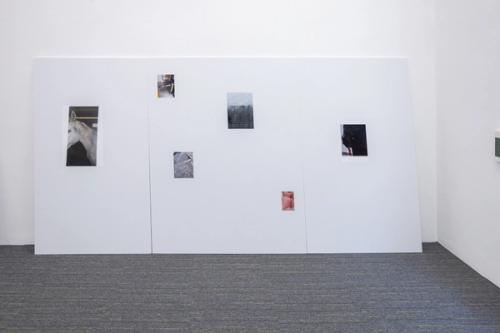
No te preocupes si no
Solo show by Cristina Stolhe
11 June - 24 July 2026
Festival Off - PHotoESPAÑA
Credits
Diego Beyró
Meow Office
Karmele Rodríguez
Regina Guil-liem
Edurne Echalar
Dossier
DownloadCristina told me she is not looking for something specific; she is just living. She is in the world and faces it as honestly as she can, without even thinking about it. She doesn't want to fool anyone; she is simply existing. The title of this exhibition, “No te preocupes si no”, contains something suspended: an acceptance of the contingency of two worlds or systems that converge in her life and in what she produces. No worries if not: if you are not one thing or the other, you are where you have to be. Life is a backstage that prepares you for what comes next, but also for what is happening simultaneously. No worries if you don't find yourself in one place or the other: what you have to do is what truly is. What she cannot scape from is precisely this reality, these systems that control art and fashion; systems that blend into her identity—one that treats her well, and the other, who knows. There are no categorizations, but rather a launching of questions: what is a photo and what does it mean to be a photographer? There are no answers, only a constant action: that of doing.
Stolhe’s practice stems from the impossibility of separating life and image; for her, there is no clear distance between the two. Photography does not appear after the experience as a representation or a memory; it is born within it, blended with the very movement of living. The backstage is a way of approaching both systems in which she moves; the backstage is the place where the image has not yet finished consolidating, a space of suspension where presence and disappearance coexist at the same time.
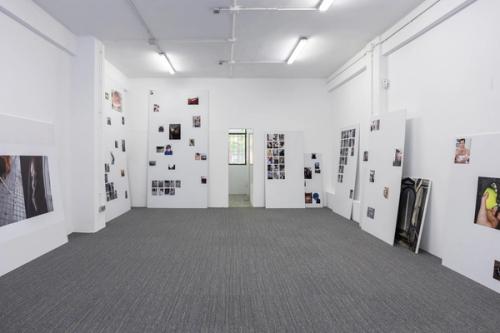
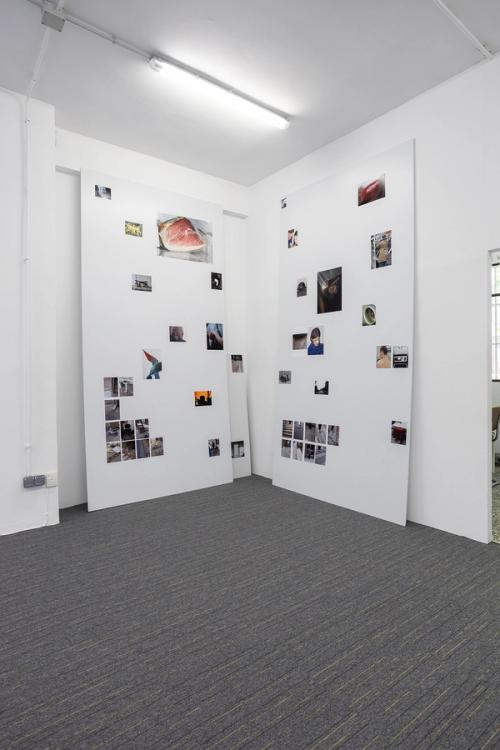
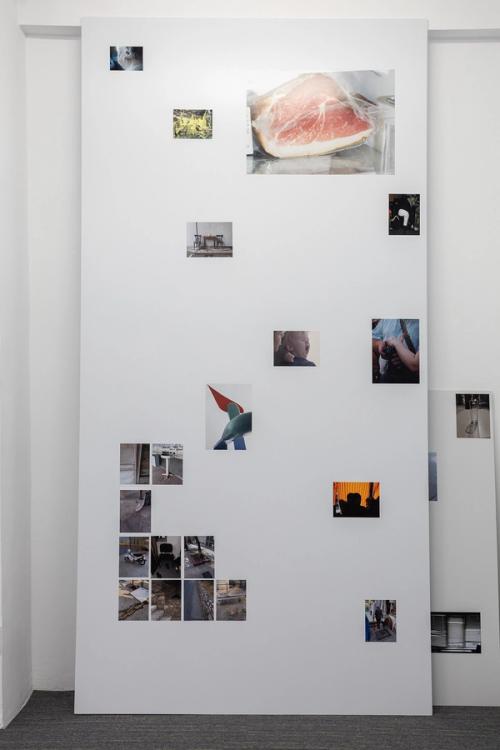
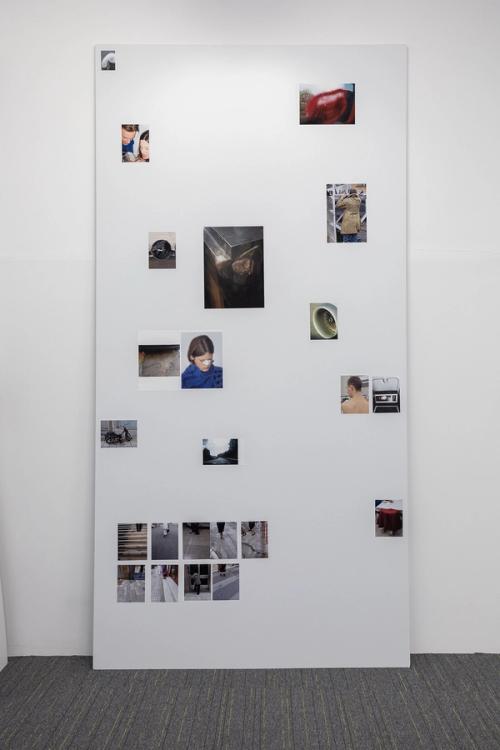
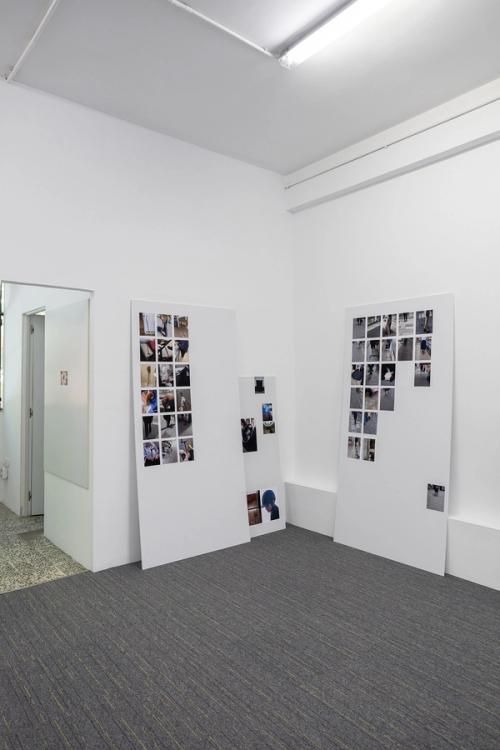
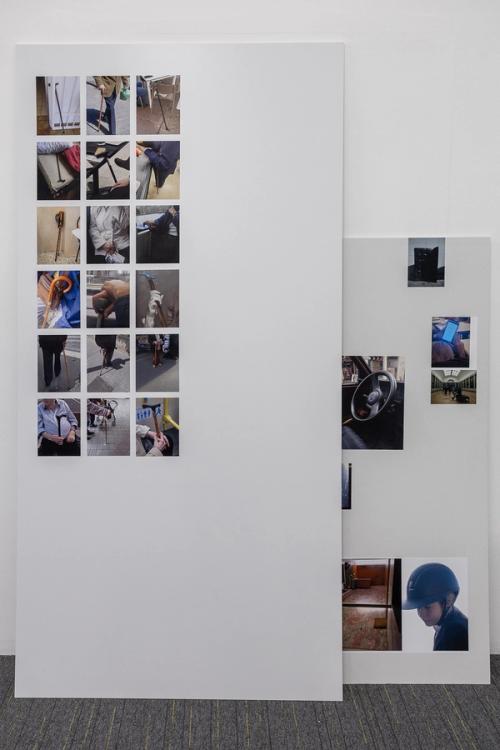
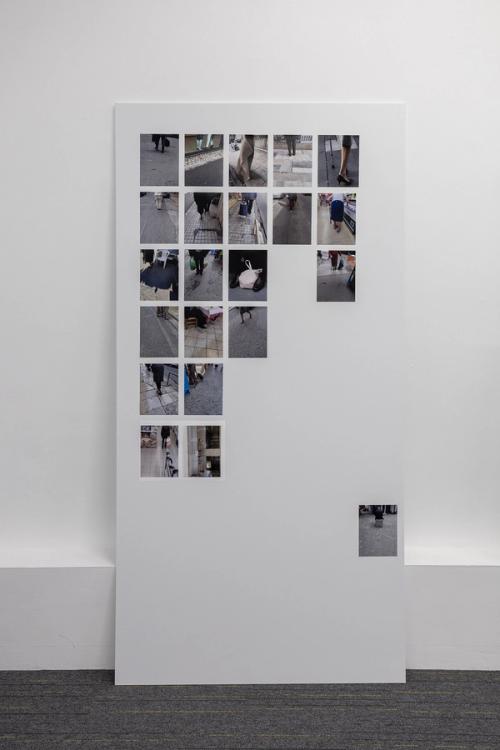
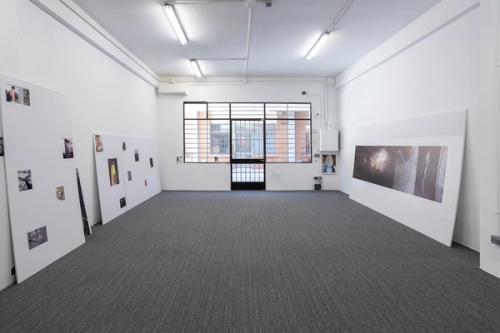
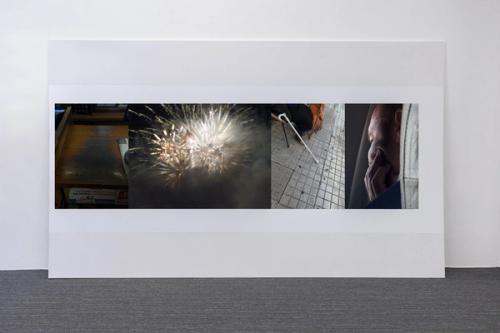
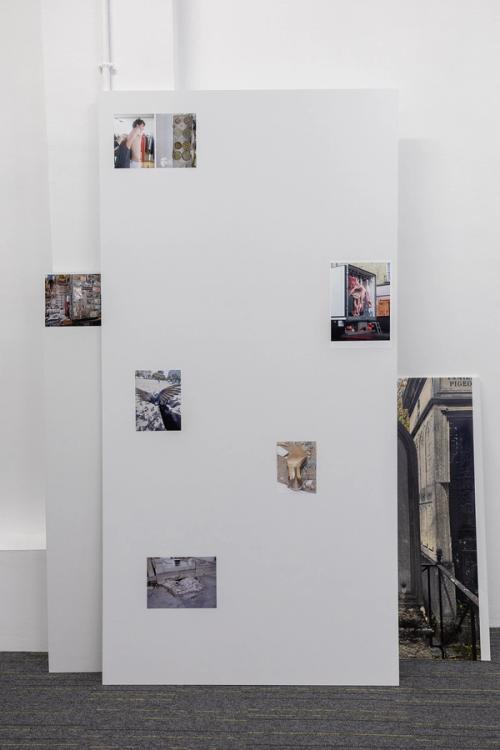
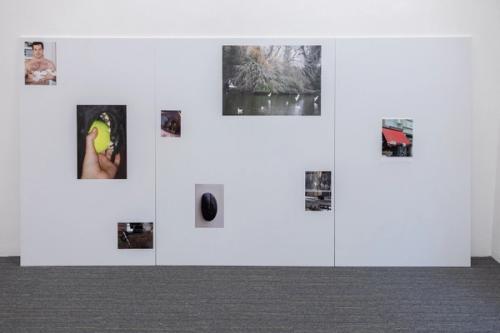
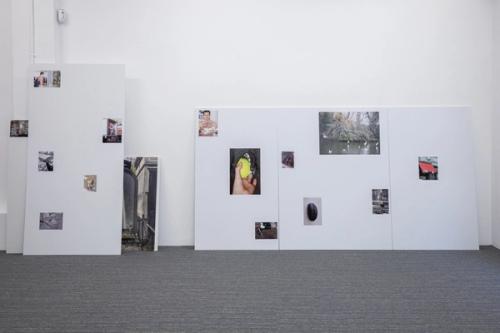
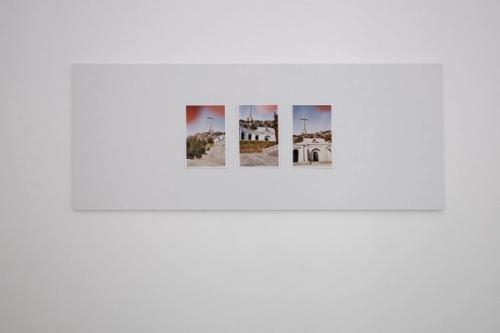
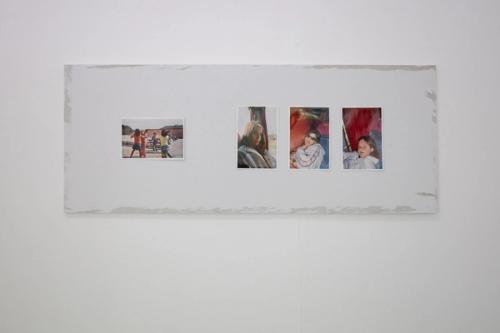
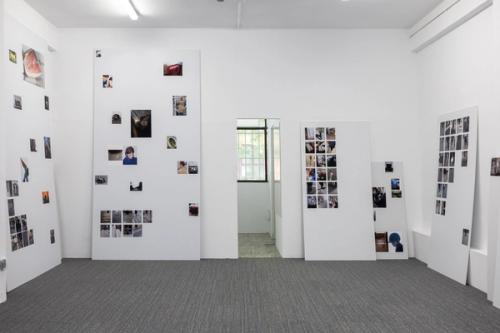
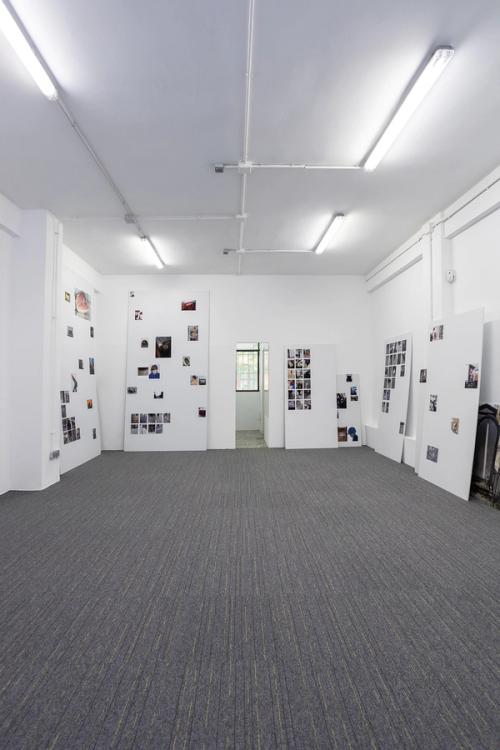
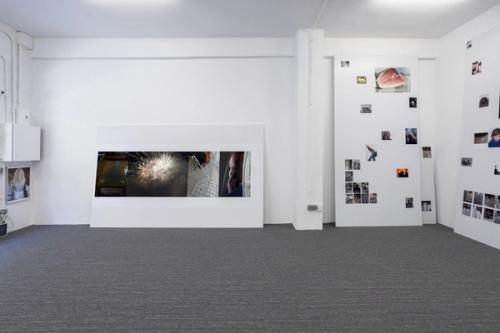
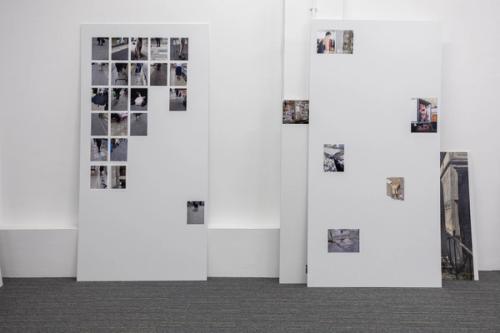
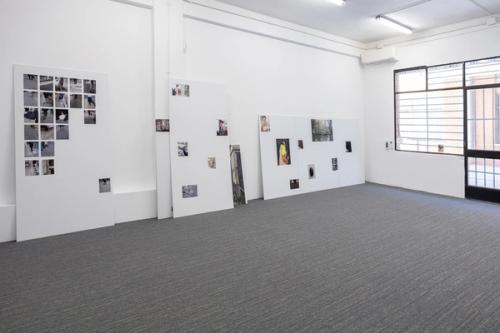
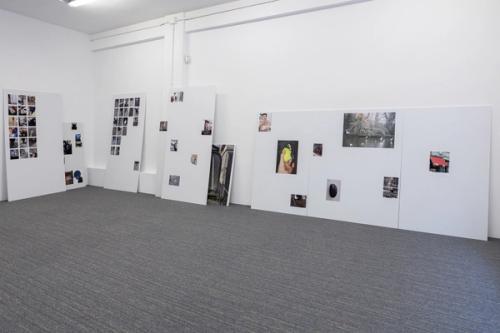
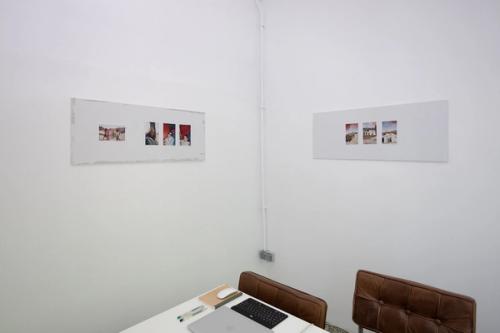
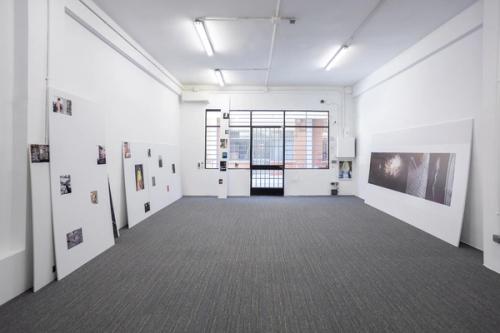
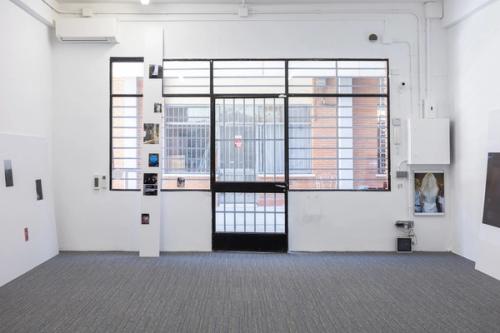
The installation decisions made in the exhibition—akin to the mood boards used in fashion shows to organize looks, visual references, or runway sequences—turn that logic into the exhibition method itself. They are also an act of irony: using them in the gallery creates a striking contrast, yet another way of existing in both systems. The images do not appear isolated or ranked by importance, but accumulated, interconnected like fragments of a memory that never stops expanding. This accumulation, however, does not imply randomness; each photograph possesses a specific weight, an irreducible emotional density. Repetition does not hollow out the images; on the contrary, it sediments them. This logic also functions as a questioning of what we consider a good or a bad photograph, or what holds value or doesn't in photography—the photographs are placed in supposedly wrong places. What gives importance and value to the produced image? What is important and what is not? Where is the identity of things, and even her own? The backstage is a place of transition.
What we see here is neither a closed archive nor a retrospective collection; we experience a kind of living organism where each image maintains an affective relationship with the others. The album—another fundamental structure in Stolhe’s practice—ceases to be a repository and becomes a mode of perception. The systems we are speaking of translate into the exhibition as elements of display that gain meaning more from the context (a gallery, or an anti-exhibition that could well be the backstage of a fashion show) than from the ‘type’ of photography produced—the photography is always the same, so is it only the context that changes?
The inclusion of photographs taken by her as a child does not function as a nostalgic origin or biographical proof; perhaps they are an affirmation of the title itself, ‘no worries if not’ you don't know how to take photos (what matters in them is the innocent mistake, which later settles into her own language). No worries if not, because now you are putting together this exhibition, and look where those photographs have ended up. It is curious that those images were taken with cameras that, at the time, were her only option (due to resources) and are now the most widely used cameras. Instead, they are part of the same visual flow as the images produced in Paris, Athens, London, or Madrid.
There is something deeply bodily in this way of looking. Goethe discovered that the eye was not a passive organ receiving the external world, but something formed alongside light itself; an organ that actively participates in what it perceives. For Goethe, vision was born not solely from clarity but from the encounter between light and darkness, between the visible and that which remains hidden; the image emerges precisely in this interstice. Stolhe’s photographs seem to inhabit exactly this place. They do not seek total transparency or absolute representation. There is always something that slips away: an incomplete gesture, a displaced frame, attention directed toward the marginal. Her images contain a very precise awareness that all vision also implies a form of invisibility. Contemporary neuroscience has shown that seeing does not consist of receiving complete images of the world, but of constructing them partially from fragments, contrasts, interruptions, and voids. The brain never receives light directly: light disappears in the retina to become electrical impulses. Vision, then, literally occurs in the darkness of the body—the visible emerges from a series of absences and reconstructions invisible to us.
“No te preocupes si no” evades linear or closed narratives. The exhibition functions more like a scattered consciousness that accumulates fragments to prevent time from disappearing entirely, without becoming a monumentalization of memory. The images retain their fragility and transitory condition—the carpeting alludes to being between systems, to the constant travel, to not finding a fixed place—, their closeness to accident and daily life; they remain open. Merleau-Ponty believed that all vision inevitably contains an invisible zone, that we never see the world completely; we barely see what provisionally emerges from a hidden background. This idea runs through the entire exhibition. The backstage, then, ceases to be just the reverse side of something, but the most creative place of all, where what finally ends up being is constantly emerging. Her photographs speak of an intimacy that is difficult to explain, not because they document a private life, but because they seem made from within the experience itself, from that place prior to critical distance where the gaze has not yet finished turning into form, into an image.
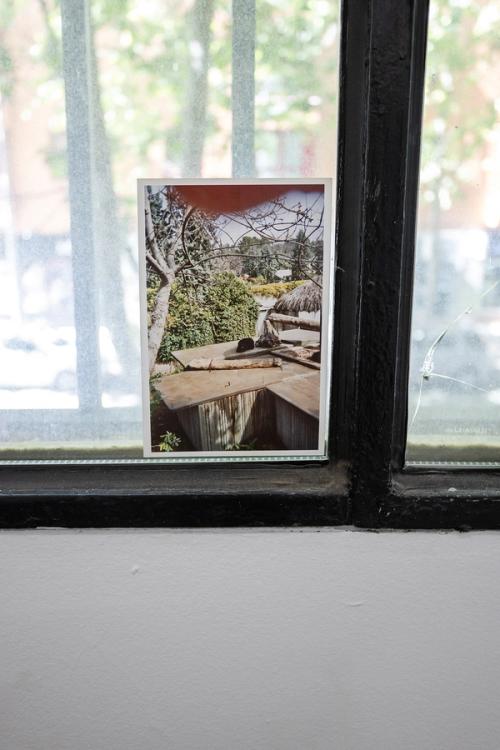
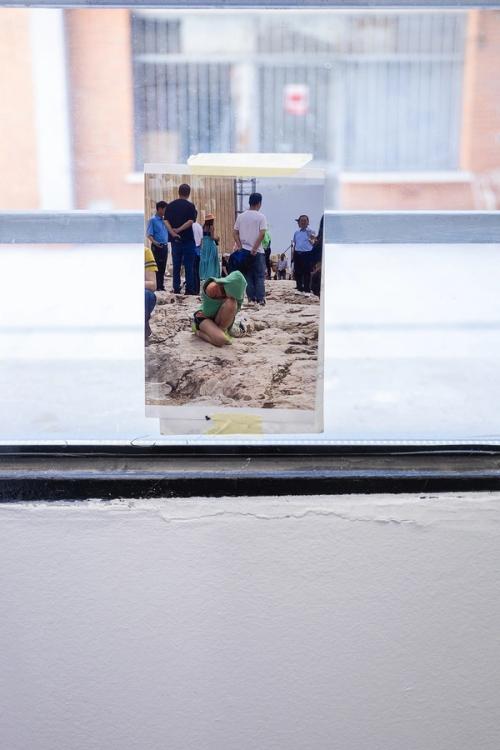
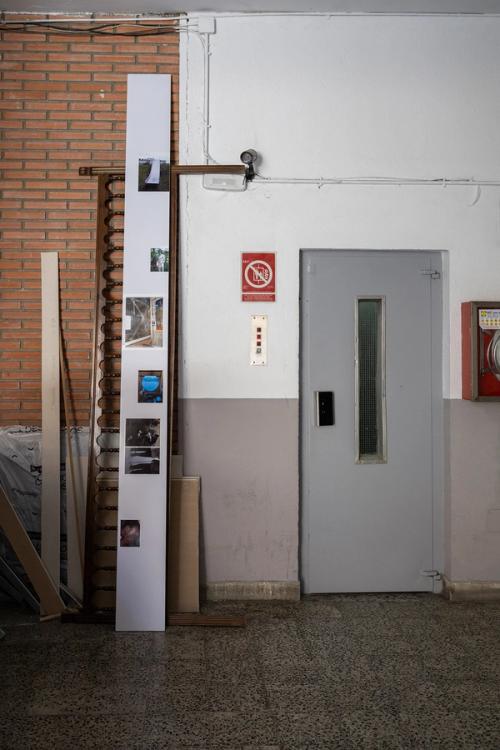
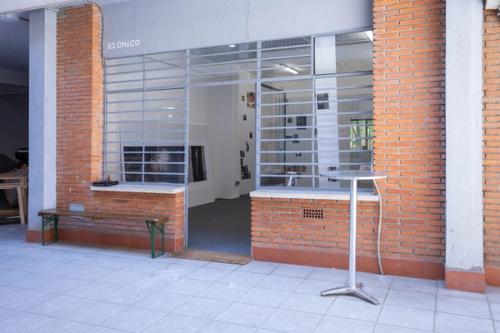
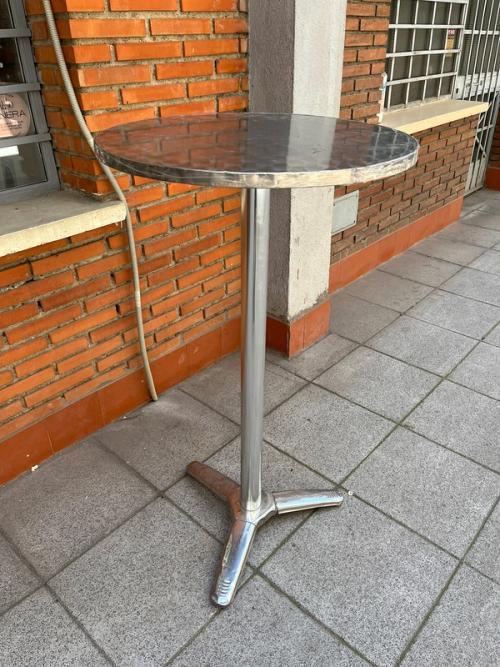
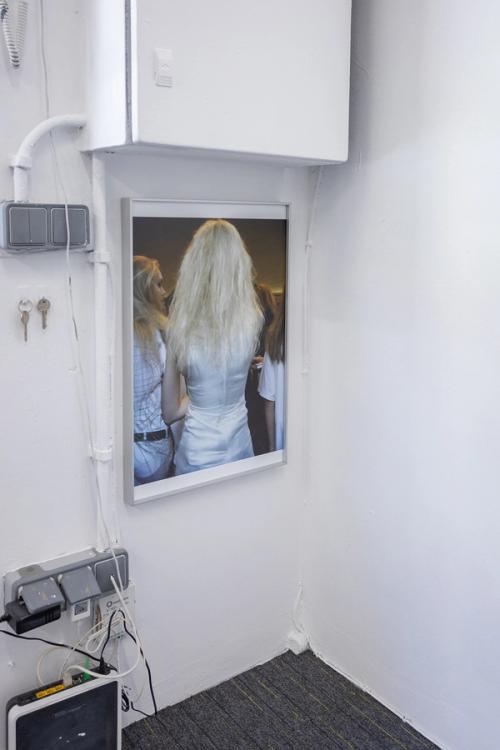
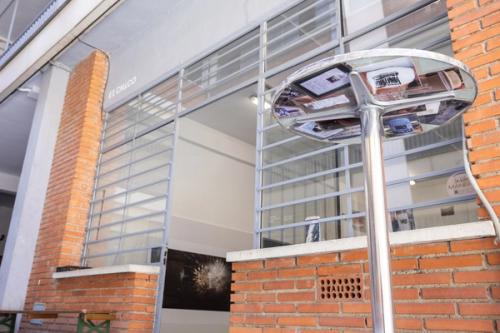
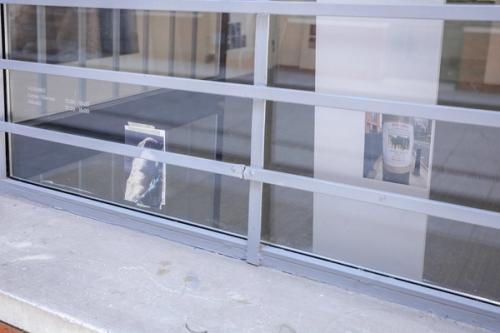
[Cristina has left traces outside the exhibition space that reinforce the idea of what is not there, of the invisible, and of the darkness where everything that is arises—it is not only what is in a specific place that holds value; if you haven't noticed where it is, you've missed it and you start over. If you have seen it, you take that with you as a treasure: the act of observing. But, no worries if you haven't seen it.]
Stolhe’s practice stems from the impossibility of separating life and image; for her, there is no clear distance between the two. Photography does not appear after the experience as a representation or a memory; it is born within it, blended with the very movement of living. The backstage is a way of approaching both systems in which she moves; the backstage is the place where the image has not yet finished consolidating, a space of suspension where presence and disappearance coexist at the same time.
The installation decisions made in the exhibition—akin to the mood boards used in fashion shows to organize looks, visual references, or runway sequences—turn that logic into the exhibition method itself. They are also an act of irony: using them in the gallery creates a striking contrast, yet another way of existing in both systems. The images do not appear isolated or ranked by importance, but accumulated, interconnected like fragments of a memory that never stops expanding. This accumulation, however, does not imply randomness; each photograph possesses a specific weight, an irreducible emotional density. Repetition does not hollow out the images; on the contrary, it sediments them. This logic also functions as a questioning of what we consider a good or a bad photograph, or what holds value or doesn't in photography—the photographs are placed in supposedly wrong places. What gives importance and value to the produced image? What is important and what is not? Where is the identity of things, and even her own? The backstage is a place of transition.
What we see here is neither a closed archive nor a retrospective collection; we experience a kind of living organism where each image maintains an affective relationship with the others. The album—another fundamental structure in Stolhe’s practice—ceases to be a repository and becomes a mode of perception. The systems we are speaking of translate into the exhibition as elements of display that gain meaning more from the context (a gallery, or an anti-exhibition that could well be the backstage of a fashion show) than from the ‘type’ of photography produced—the photography is always the same, so is it only the context that changes?
The inclusion of photographs taken by her as a child does not function as a nostalgic origin or biographical proof; perhaps they are an affirmation of the title itself, ‘no worries if not’ you don't know how to take photos (what matters in them is the innocent mistake, which later settles into her own language). No worries if not, because now you are putting together this exhibition, and look where those photographs have ended up. It is curious that those images were taken with cameras that, at the time, were her only option (due to resources) and are now the most widely used cameras. Instead, they are part of the same visual flow as the images produced in Paris, Athens, London, or Madrid.
There is something deeply bodily in this way of looking. Goethe discovered that the eye was not a passive organ receiving the external world, but something formed alongside light itself; an organ that actively participates in what it perceives. For Goethe, vision was born not solely from clarity but from the encounter between light and darkness, between the visible and that which remains hidden; the image emerges precisely in this interstice. Stolhe’s photographs seem to inhabit exactly this place. They do not seek total transparency or absolute representation. There is always something that slips away: an incomplete gesture, a displaced frame, attention directed toward the marginal. Her images contain a very precise awareness that all vision also implies a form of invisibility. Contemporary neuroscience has shown that seeing does not consist of receiving complete images of the world, but of constructing them partially from fragments, contrasts, interruptions, and voids. The brain never receives light directly: light disappears in the retina to become electrical impulses. Vision, then, literally occurs in the darkness of the body—the visible emerges from a series of absences and reconstructions invisible to us.
“No te preocupes si no” evades linear or closed narratives. The exhibition functions more like a scattered consciousness that accumulates fragments to prevent time from disappearing entirely, without becoming a monumentalization of memory. The images retain their fragility and transitory condition—the carpeting alludes to being between systems, to the constant travel, to not finding a fixed place—, their closeness to accident and daily life; they remain open. Merleau-Ponty believed that all vision inevitably contains an invisible zone, that we never see the world completely; we barely see what provisionally emerges from a hidden background. This idea runs through the entire exhibition. The backstage, then, ceases to be just the reverse side of something, but the most creative place of all, where what finally ends up being is constantly emerging. Her photographs speak of an intimacy that is difficult to explain, not because they document a private life, but because they seem made from within the experience itself, from that place prior to critical distance where the gaze has not yet finished turning into form, into an image.
[Cristina has left traces outside the exhibition space that reinforce the idea of what is not there, of the invisible, and of the darkness where everything that is arises—it is not only what is in a specific place that holds value; if you haven't noticed where it is, you've missed it and you start over. If you have seen it, you take that with you as a treasure: the act of observing. But, no worries if you haven't seen it.]